
Door hesitates or lurches forward
Sometimes the door hesitates halfway up, catches, then lurches forward. Other times it's quieter but the door rides crooked in the opening, rubbing one side of the weatherstrip.
Renton, WA
Worn or cracked rollers on a Renton garage door usually trace back to 1980s-era tracks and hardware. We replace rollers and diagnose the real cause, not just the symptom.
Symptoms
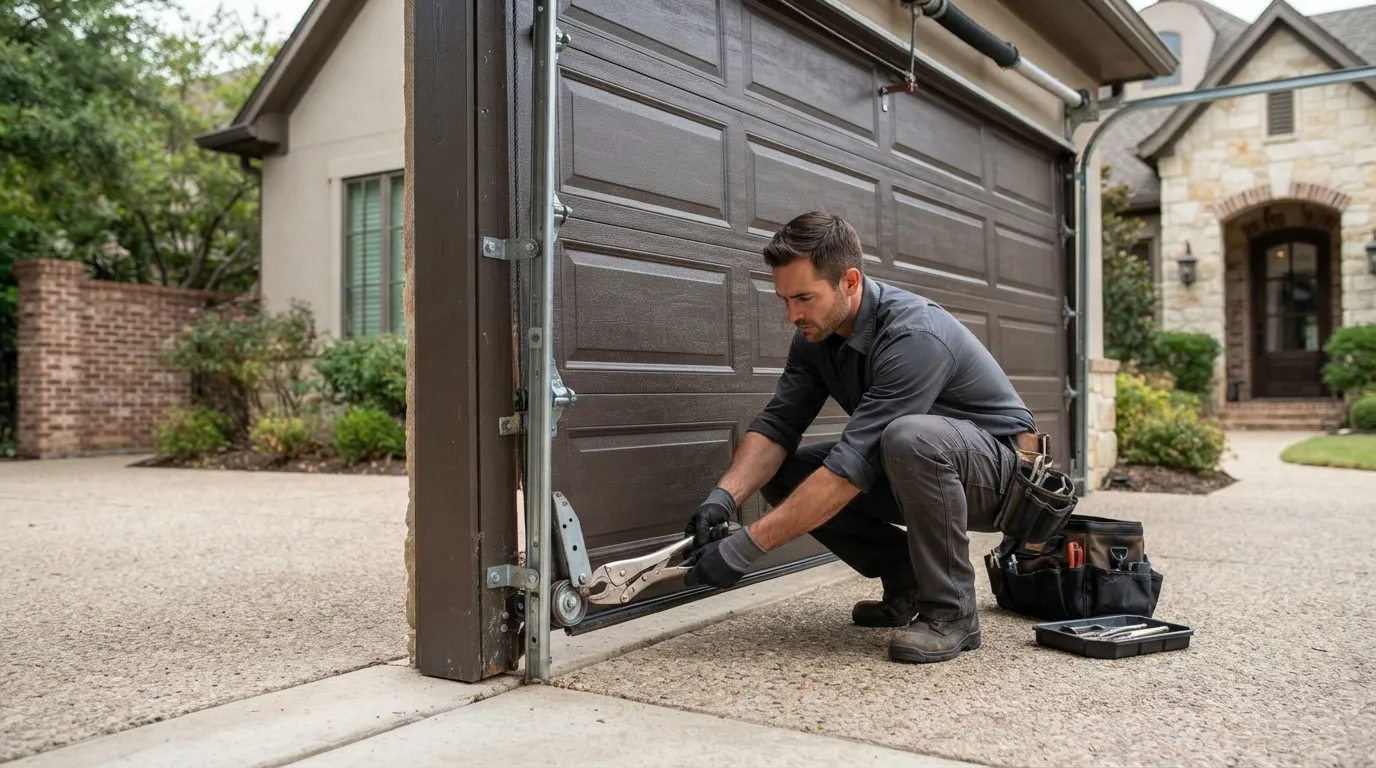
A door that grinds, jerks, or bangs at the same spot every time it opens usually has a roller problem, not a spring problem. You'll hear it before you see it: a rhythmic clunk as a flat or chipped roller rolls through the track, or a screech where a dry stem is binding against the bracket.
Sometimes the door hesitates halfway up, catches, then lurches forward. Other times it's quieter but the door rides crooked in the opening, rubbing one side of the weatherstrip.
On a lot of the homes we get called to, the rollers are original to a door installed sometime in the 1962-2005 build window that covers most of this area's housing stock. That's forty-plus years on steel rollers that were never designed to run that long.
Nylon rollers wear out sooner than steel ones but run quieter, and by the time an owner notices the noise, the roller stem is usually already grooved into the track edge. Left alone, a bad roller accelerates wear on the track itself, and eventually on the cable drum, which turns a $30-40 part into a bigger repair.
DIY or pro
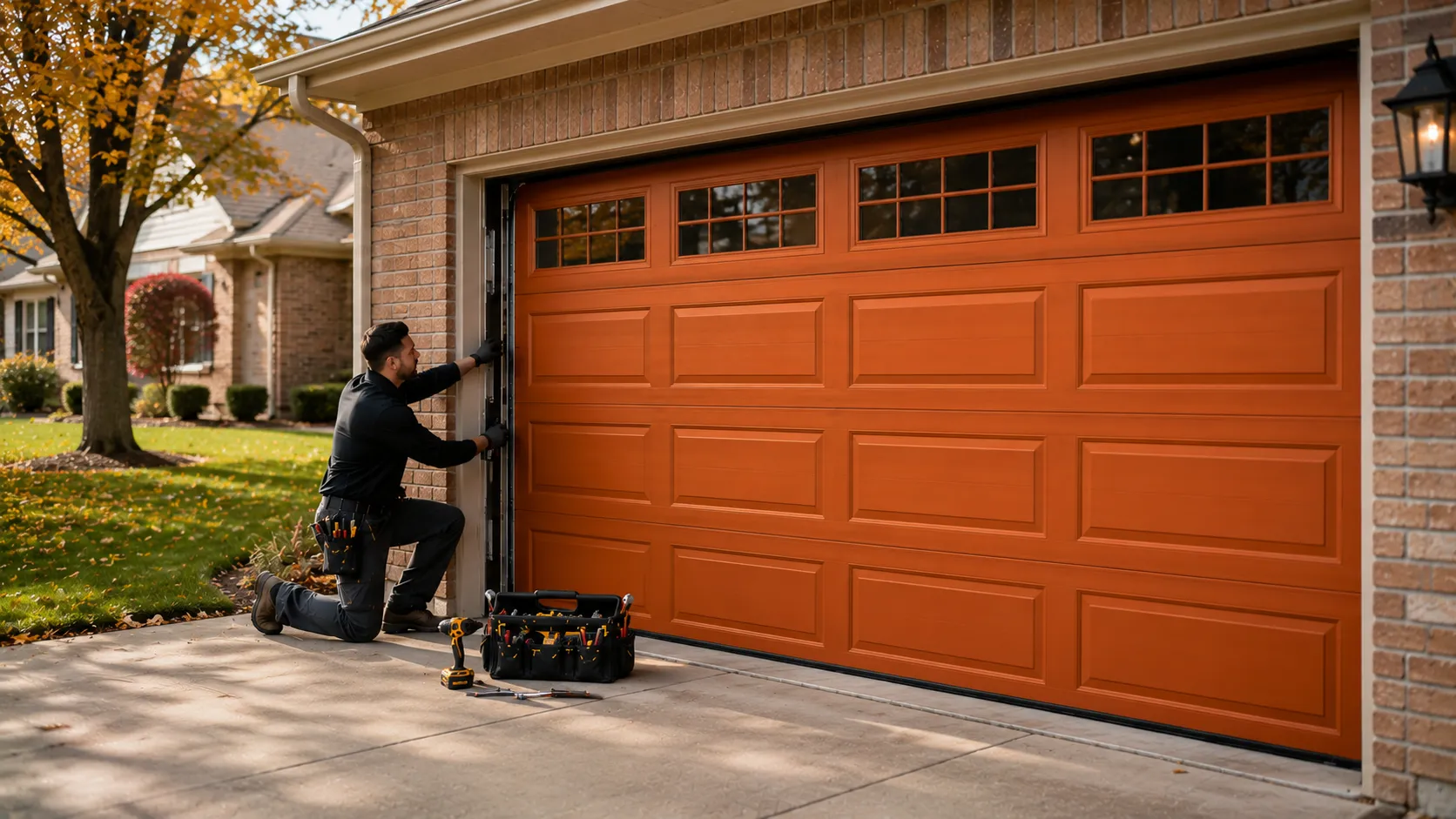
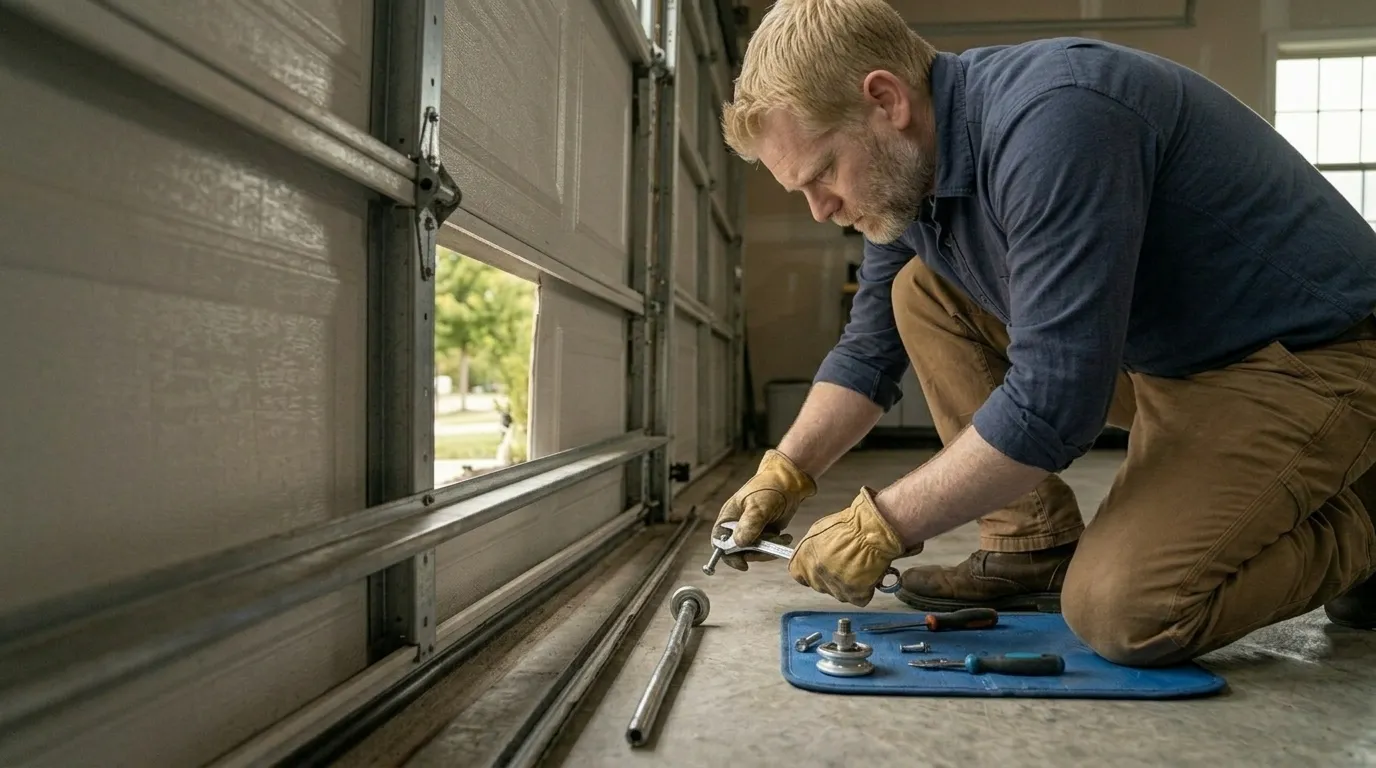
Rollers look simple to swap, and the bottom two on either side of the door often are - unbolt the roller bracket, slide the old roller out, slide a new one in.
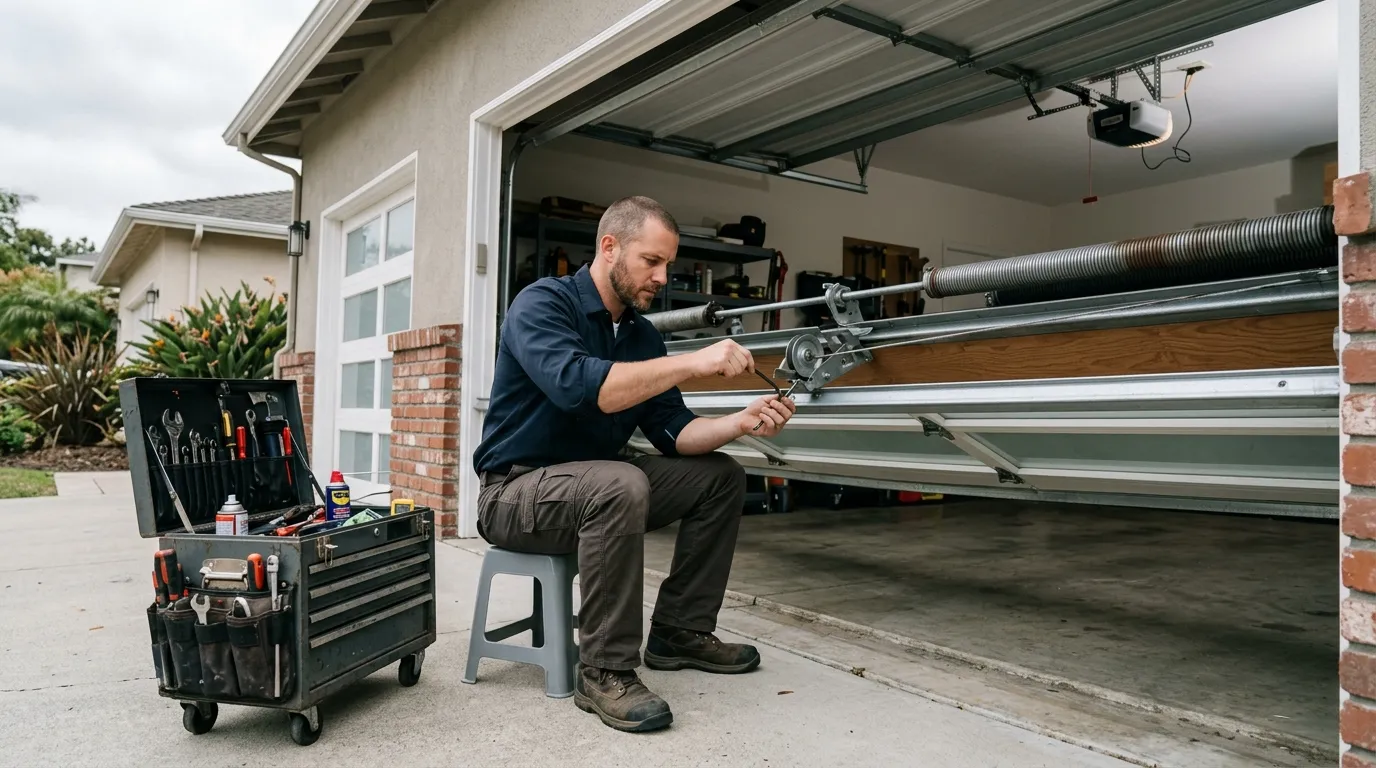
The rollers near the top of the track, close to the spring and cable system, are a different story. Pull the wrong bracket on a door under spring tension and the section can drop or the cable can jump the drum, and now you're dealing with a hand injury risk instead of a squeaky door.
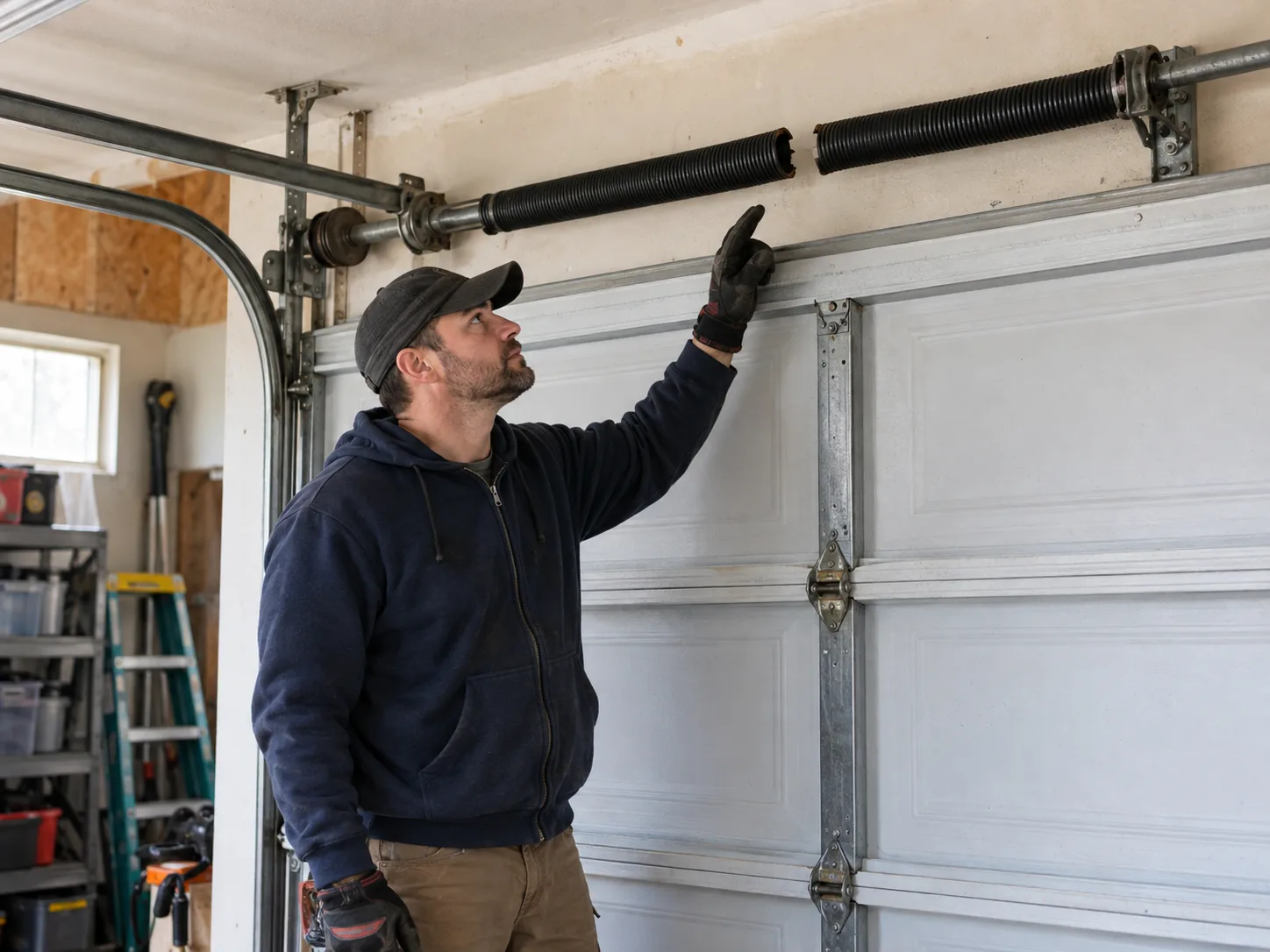
We'll tell you straight: if you're comfortable with a socket wrench and you're working on a bottom roller with the door fully down and unplugged, that's a reasonable weekend job. If the roller in question is one of the top two on either track, or the door has a broken spring alongside the roller noise, that's not a DIY call.
We don't do it for the sake of billing a service call - we do it because a torsion spring holds enough stored energy to break a wrist, and we've seen the injuries that come from underestimating it.
Job timing
A standard roller replacement, all ten rollers on a single door, is usually a job we finish in under an hour once we're on site, including a check of the track alignment and hinges while we're in there.
If only a couple of rollers are bad, it's faster still. Steel rollers with sealed bearings cost more up front than plastic ones but last longer and run quieter, which matters if the garage sits under a bedroom - a common layout in the two and three-story homes built through the 1980s and 90s across this area.
The honest limitation: if the track itself is bent or the door is out of square, roller replacement alone won't fix the noise. We'll flag that on site rather than sell you rollers that won't solve the problem.
Same goes for doors old enough that the roller brackets themselves are rusted through - at that point we're talking about a bracket and roller job together, not a simple part swap.
Local causes
The service area runs from Renton out through Bryn Mawr-Skyway, Fairwood, Newcastle, and the other communities we cover, and the housing tells a consistent story: most of it went up between 1962 and 2005, with the bulk concentrated in the 1980s and 90s across the roughly 44 named areas in this stretch of King County. That means a huge share of garage doors are old enough for original rollers to be well past their working life, whether they're on a colonial in Fairwood or a split-level near Newcastle.
Climate plays a smaller but real role. This is a mild region with occasional freeze, not the deep-freeze cycling that cracks nylon rollers outright further inland, but the region's damp winters do dry out and gum up roller stems and track lubricant on doors that haven't seen maintenance in a decade or more. Dirt and moisture work into the bearing, the roller starts to bind, and a homeowner hears grinding months before anything actually breaks. It's a slow failure, which is exactly why it gets ignored until the door won't move smoothly at all.
Questions
Most residential doors have ten rollers total, five on each side, though the exact count depends on how many panels the door has. On a lot of the older doors we see in this area, all ten are original steel rollers that have simply worn down over the decades.
No. Roller noise is a mechanical grinding or clunking tied to the door's movement through the track, usually at a fixed point in the cycle. Opener noise tends to come from the motor unit itself, at the same spot every time regardless of where the door is in the track.
Yes, if only one or two are actually bad. We check the whole set before recommending a full replacement - no reason to sell you parts you don't need. That said, if the rollers are original to a decades-old door, the rest are usually close behind.
Explore more
Ready when you are
Renton Garage Door Pros repairs and installs garage doors, springs and openers in Renton, WA and the surrounding area.