
Guide
Garage Doors Built Before Insulation Rules in Renton
Renton homes built 1962-2005 often have original single-layer steel doors that predate insulation standards. Here's what that means for repair calls today.
Local detail
Season by Season
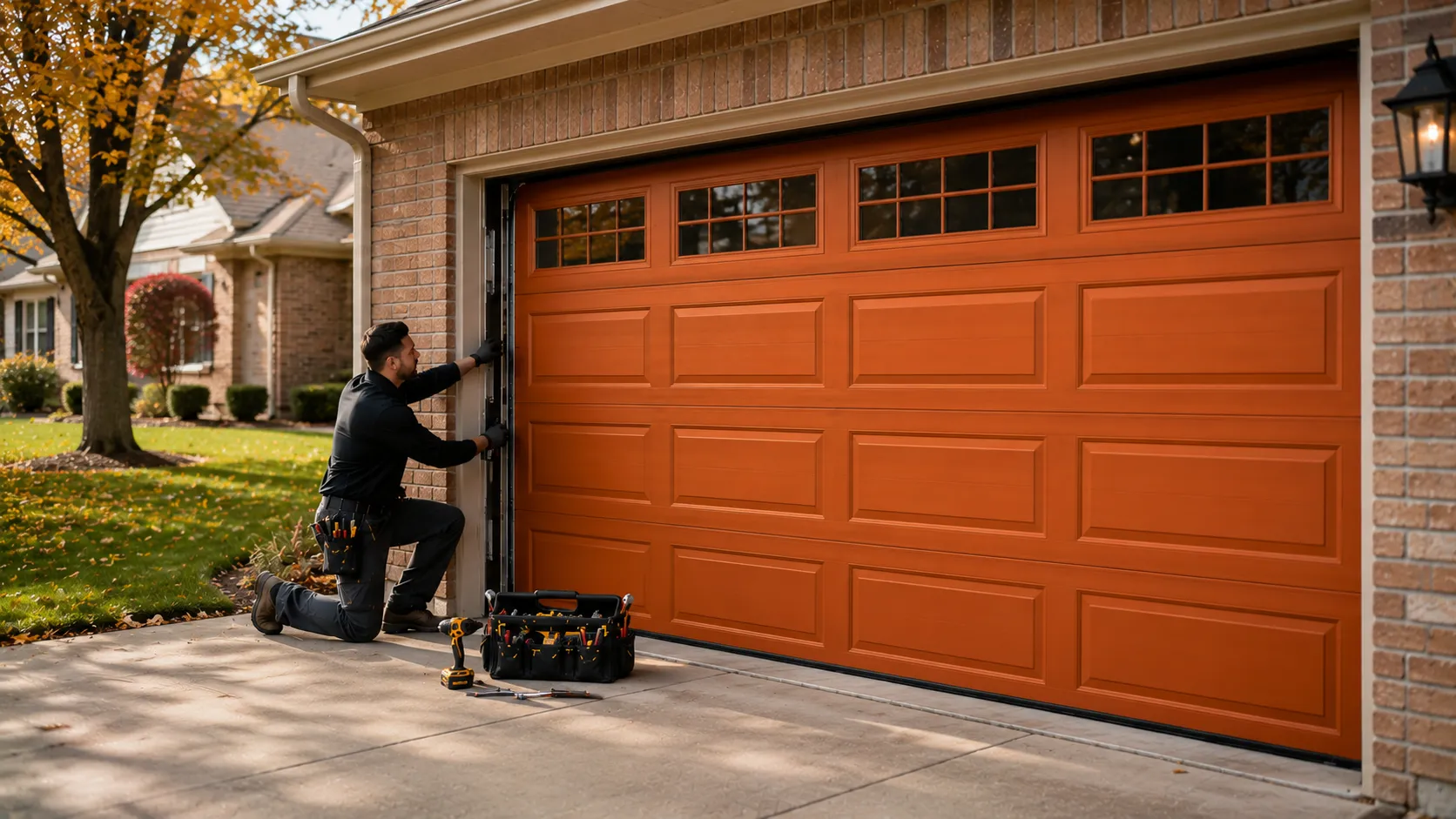
Renton sits in a mild climate band with occasional freeze, not the kind of place that cracks a garage door slab in January the way a hard-freeze region does. But mild with occasional freeze is its own trap. A single-layer steel door with no insulation layer behind it doesn't get destroyed by cold - it gets damp.
Warm, wet air off the Sound meets a cold steel panel on the handful of freeze nights each winter, and you get condensation beading on the inside face. On an original door from the 1962-2005 building wave, that moisture sits against bare steel with no thermal break, and over years it's what starts the rust at the bottom panel seams before anything else fails. Spring comes and goes without much drama here compared to hail-belt towns.
Summer is where the wood jambs on the older houses shrink a little and the door starts binding on one side of the track - not a broken part, just movement in a frame that's a few decades old. None of this is severe weather. It's slow, cumulative wear on doors that were never built with a thermal layer in mind, running against a climate that swings just enough, just often enough, to matter over 40 years.
The area
The Situation
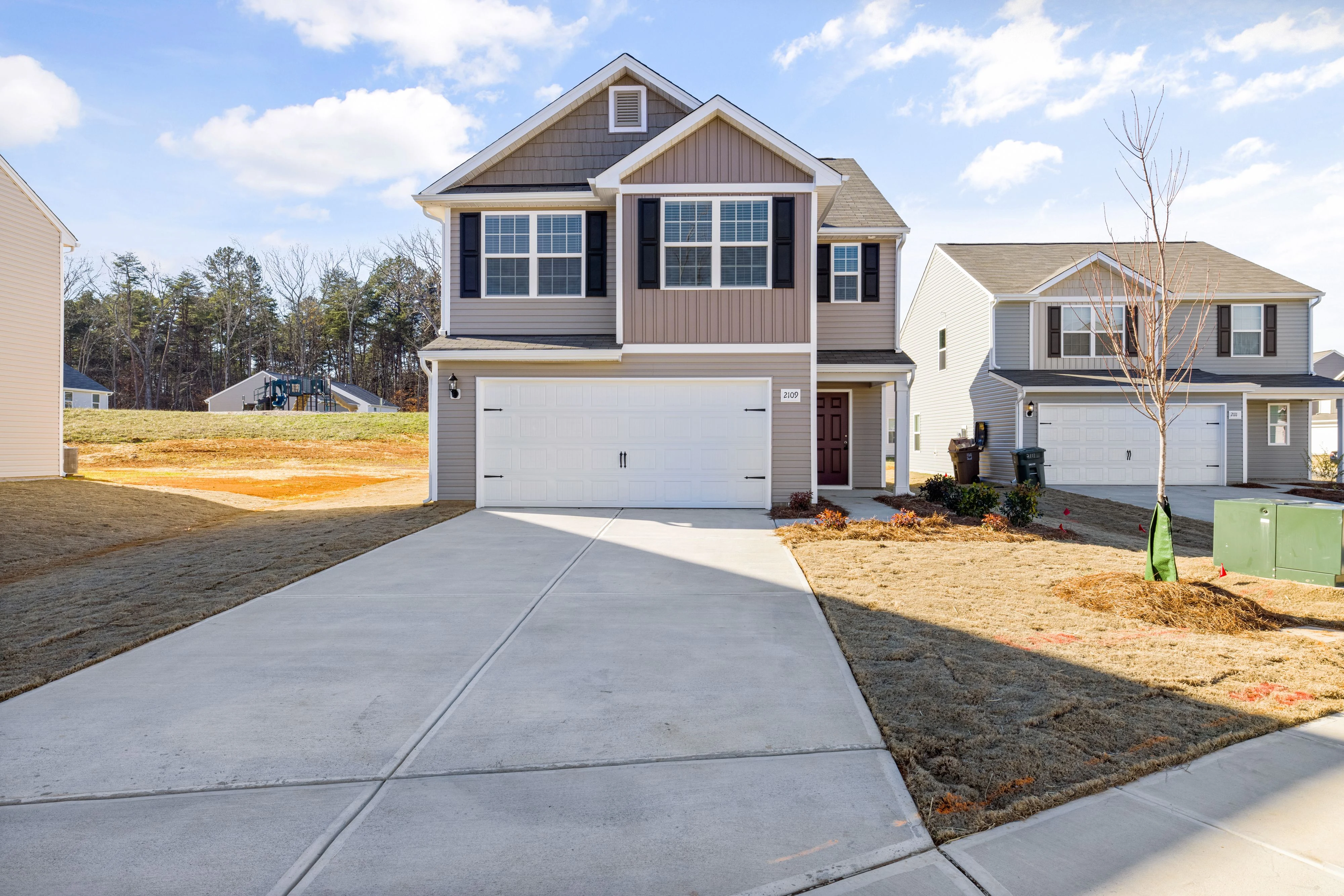
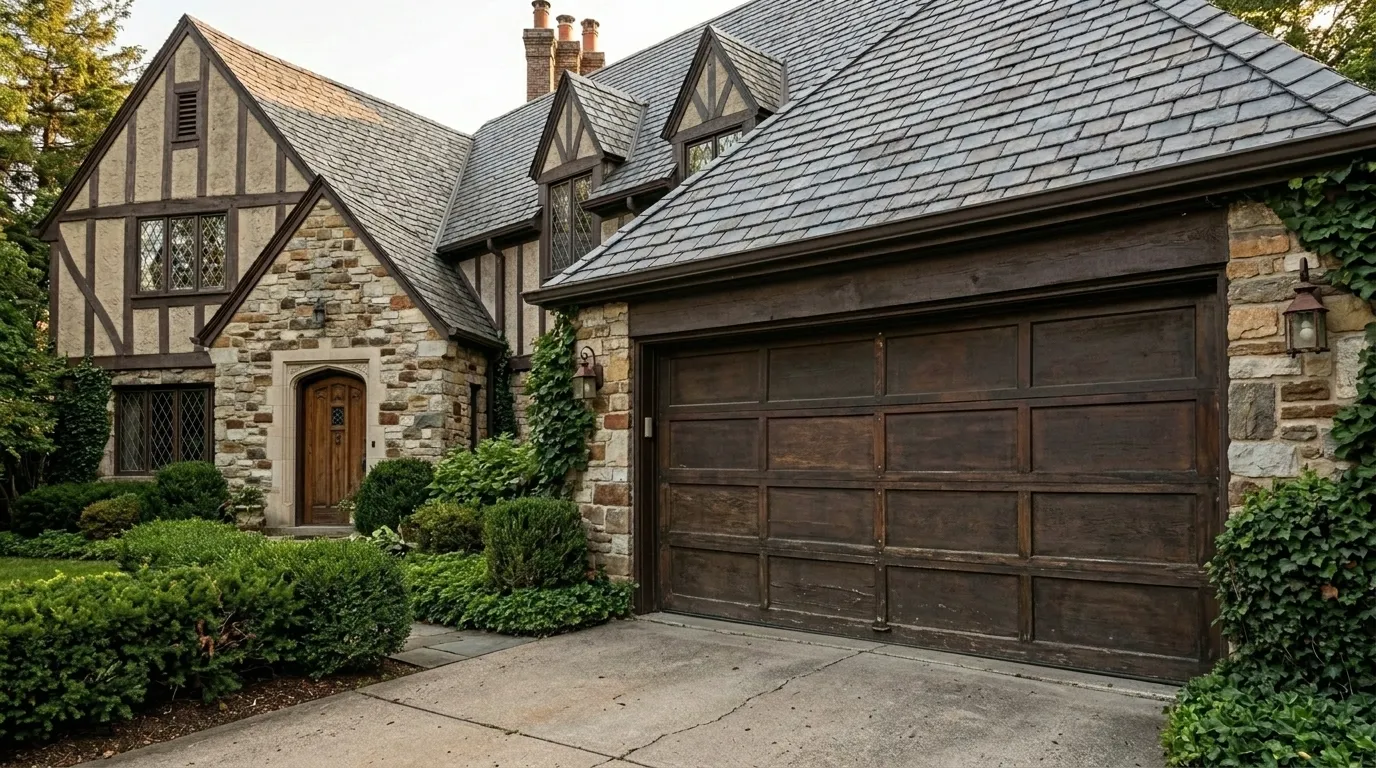
Housing across this service area was mostly built between 1962 and 2005, with the median landing around 1984, and the bulk of it clusters in the 1980s and 90s across the 44 named areas within reach of this shop - from Bryn Mawr-Skyway two miles out to Fairwood, Newcastle, and East Renton Highlands a few miles further, out past Maple Valley and Snoqualmie toward Milton seventeen miles south. That's a lot of houses built in the same 20-year window, which means a lot of garage doors from the same generation hitting the same failure points at the same time. The service area counts 213,261 households and 118,318 owner-occupied houses, so this isn't a small pocket of old stock - it's the majority of what's out there.
Median household income runs $131,283, which shows up in the kind of calls that come in: fewer patch jobs to squeeze one more year out of a door, more calls where someone decides to just replace the thing once the spring or opener from the original build finally gives out. The situation isn't dramatic. It's a lot of doors from the same 20-year stretch, built to the standards of that era, aging out roughly together.
What we find
What Most People Get Wrong
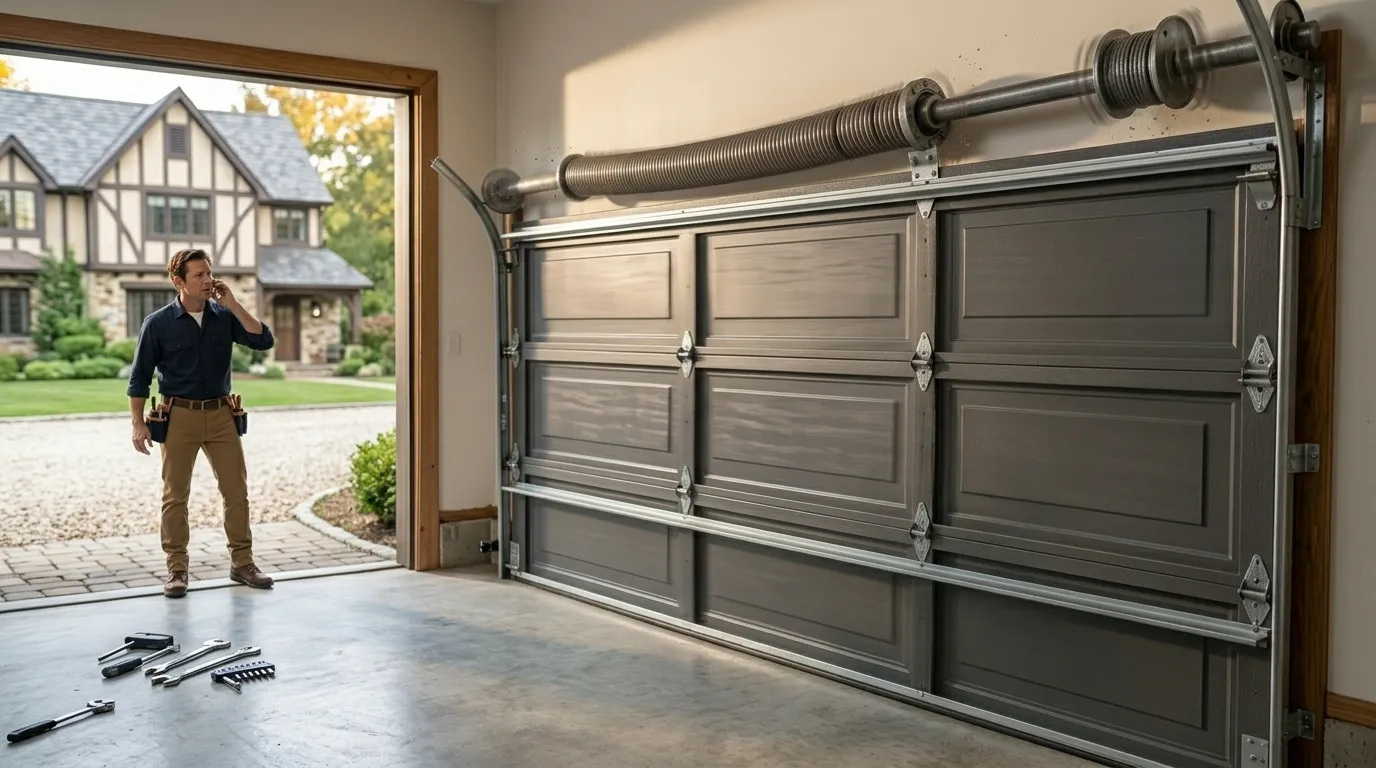
The most common mistake is treating an uninsulated original door as an opener problem. A door that's noisy, slow to seat, or sags at the bottom corner on a house from the 1962-2005 wave usually isn't the opener - it's the door itself. Single-layer steel from that era flexes more than people expect, especially once the bottom seal has hardened and stopped cushioning the slam.
People replace the opener, the noise doesn't go away, and now they've spent money on the wrong half of the system. The second mistake is assuming a foam insulation kit solves the condensation problem described above. It helps a little with sound and a little with temperature, but it doesn't fix a door with no vapor barrier or thermal break built into the panel construction, and it won't stop rust that's already started at the seams.
We'll say plainly: once rust has gone through a bottom panel on one of these older doors, a foam kit is a delay, not a fix. The honest answer at that point is panel or door replacement, not another patch. That's not the answer everyone wants to hear, but it's the one that saves a second call six months later.
How we work
What Local Conditions Do
Mild with occasional freeze doesn't sound like a threat, and compared to a lot of the country it isn't. But it's exactly the kind of climate that works on a door slowly instead of all at once. The freeze events are rare enough that a homeowner doesn't think about the door all winter, then rare enough that when condensation does form on a cold night, it sits there undisturbed on an uninsulated panel with nobody wiping it down. Do that for fifteen or twenty winters on a house built in the 1980s median year for this area, and the rust pattern along the bottom seam is predictable - we've seen it on enough of these doors to know where to look first.
The same mild pattern is easy on springs compared to a true freeze-thaw region; torsion springs here don't see the same extreme cycling. So the failure mode in Renton skews toward moisture and panel condition on the original doors rather than spring snap from cold contraction. That's a narrower, more specific kind of wear than
Questions
Common questions
Is my garage door too old to insulate now?
You can add a foam kit to an original single-layer steel door, and it will cut some noise and slow some temperature swing. It won't add a real thermal break or vapor barrier, and if rust has already started at the bottom seam, insulating over it doesn't stop that. At that point replacement is the honest fix, not another patch.
Why does my garage door sweat on cold nights?
Renton's mild-with-occasional-freeze climate means warm, damp air meets a cold, uninsulated steel panel on the handful of freeze nights each year. On original doors from the 1962-2005 building era with no thermal layer, that condensation sits on bare steel and is usually where bottom-panel rust starts first.
My opener is fine but the door still sags - what's going on?
On houses from this area's median 1984 build year, a sagging or slow-seating door is usually the door itself, not the opener. Single-layer steel flexes more once the bottom seal hardens. Replacing the opener won't fix a door problem, and it's the most common wrong call we see.
Ready when you are
Need a garage door sorted in Renton?
Renton Garage Door Pros repairs and installs garage doors, springs and openers in Renton, WA and the surrounding area.