
Guide
Why a Door Goes Off Track - And Why It Happens Here
Most Renton garages were built between 1962 and 2005, and that era of track and hardware is exactly what fails first. Here's why doors jump track here.
Local detail
Season by Season
Renton sits in a mild band with occasional freeze, not the deep-freeze swings that crack steel tracks in a single winter. That's the good news. The bad news is that mild-with-freeze is a slow grind rather than a sudden break.
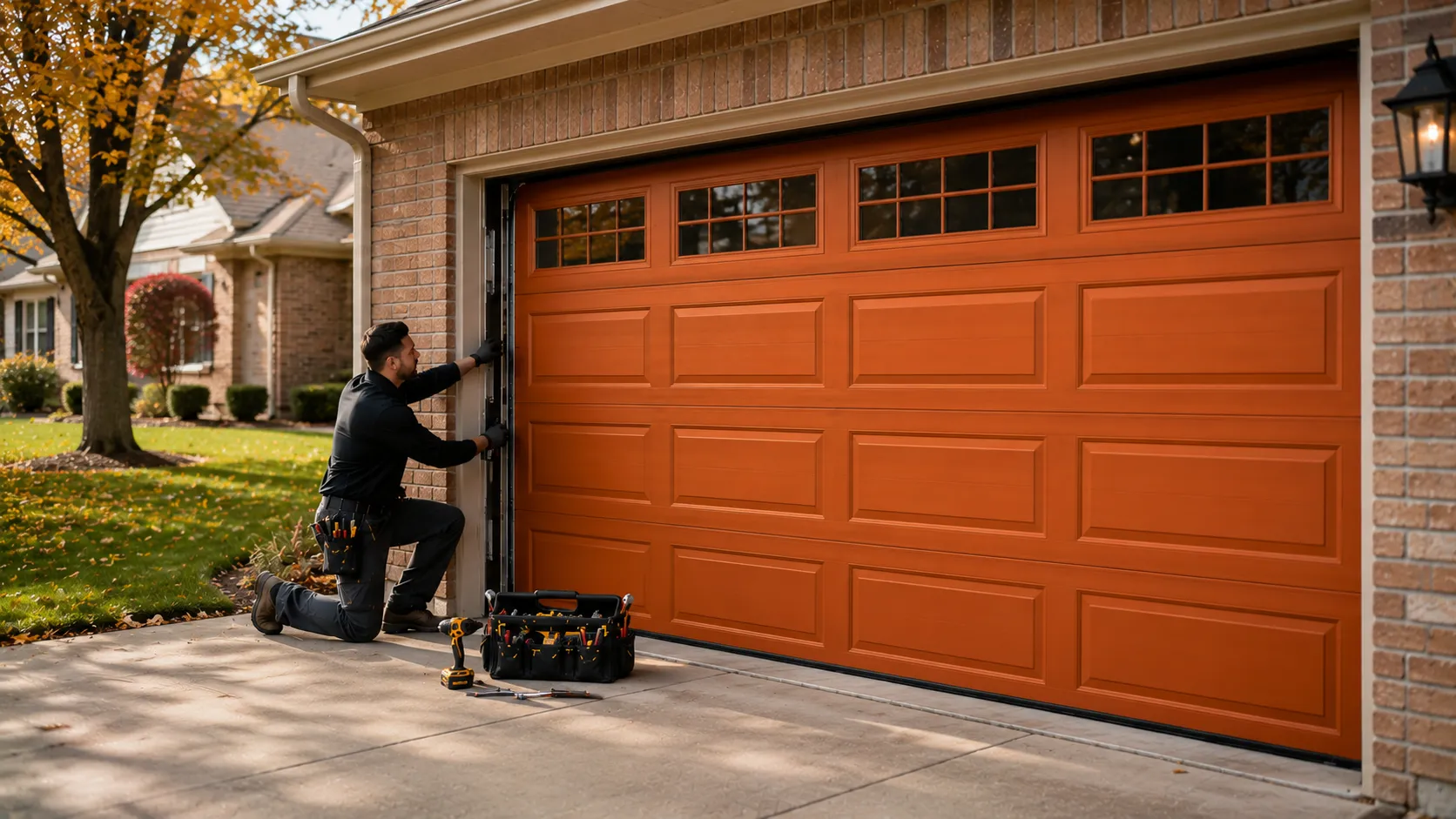
A few nights a year dip cold enough to stiffen the grease in rollers and shrink the metal in the track just slightly - not enough to snap anything, but enough to change the tolerance between roller and rail by a hair. Do that fifteen or twenty times a winter, year after year, on a door installed any time from the 1960s through the mid-2000s, and the track brackets that were torqued down decades ago start to walk loose. Spring and fall bring the opposite problem: humidity swings that make wood jambs (common on houses from this build era) swell and shift, pulling the track's mounting points out of true.
Neither extreme is dramatic. Both are cumulative, and cumulative is what actually knocks a door off its rail around here - not one bad storm.
The area
The Situation
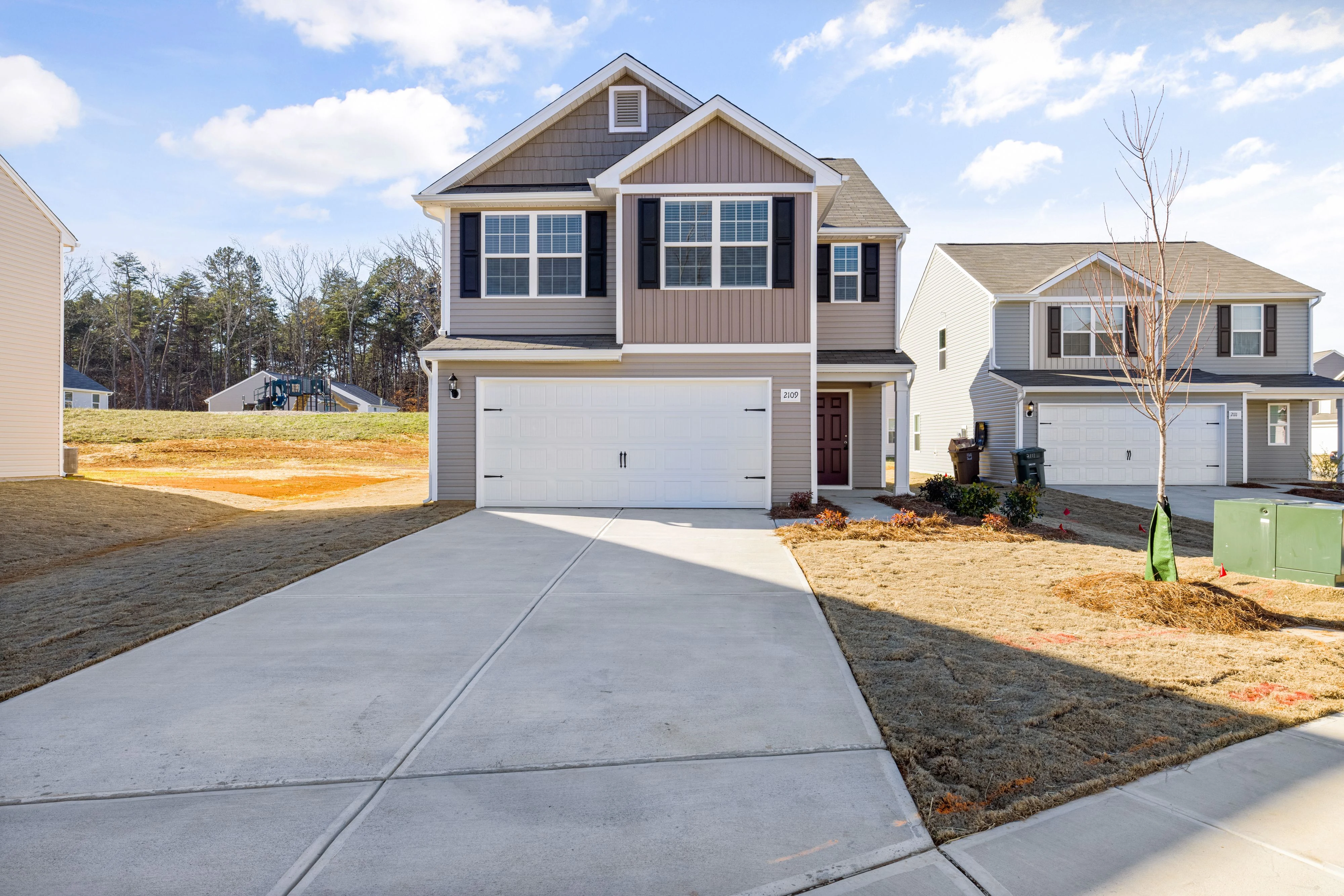
The housing stock across this service area runs mostly 1962 to 2005, with a median build year around 1984, and that's not a small detail - it's the reason this page exists. A door installed on a house from that window is old enough that the original track brackets, if never replaced, have been through 40+ years of seasonal movement. Across the 44 named areas in this stock, from Bryn Mawr-Skyway two miles out to Fairwood at three, the pattern repeats: same era, same hardware generation, same failure mode.
Track alignment isn't set once and forgotten. It's held by lag bolts into jamb studs, and on a house this age those studs have moved, the wood has dried out or swelled back, and the bolts have backed off a turn or two without anyone noticing. A door doesn't need much misalignment to start riding the edge of the roller channel instead of the center - a quarter inch is enough to make it bind, then jump.
What we find
What Most People Get Wrong
The instinct is to blame the opener. The door starts grinding or stuttering, and the assumption is the motor is dying or the sensors are dirty. Most of the time neither is true.
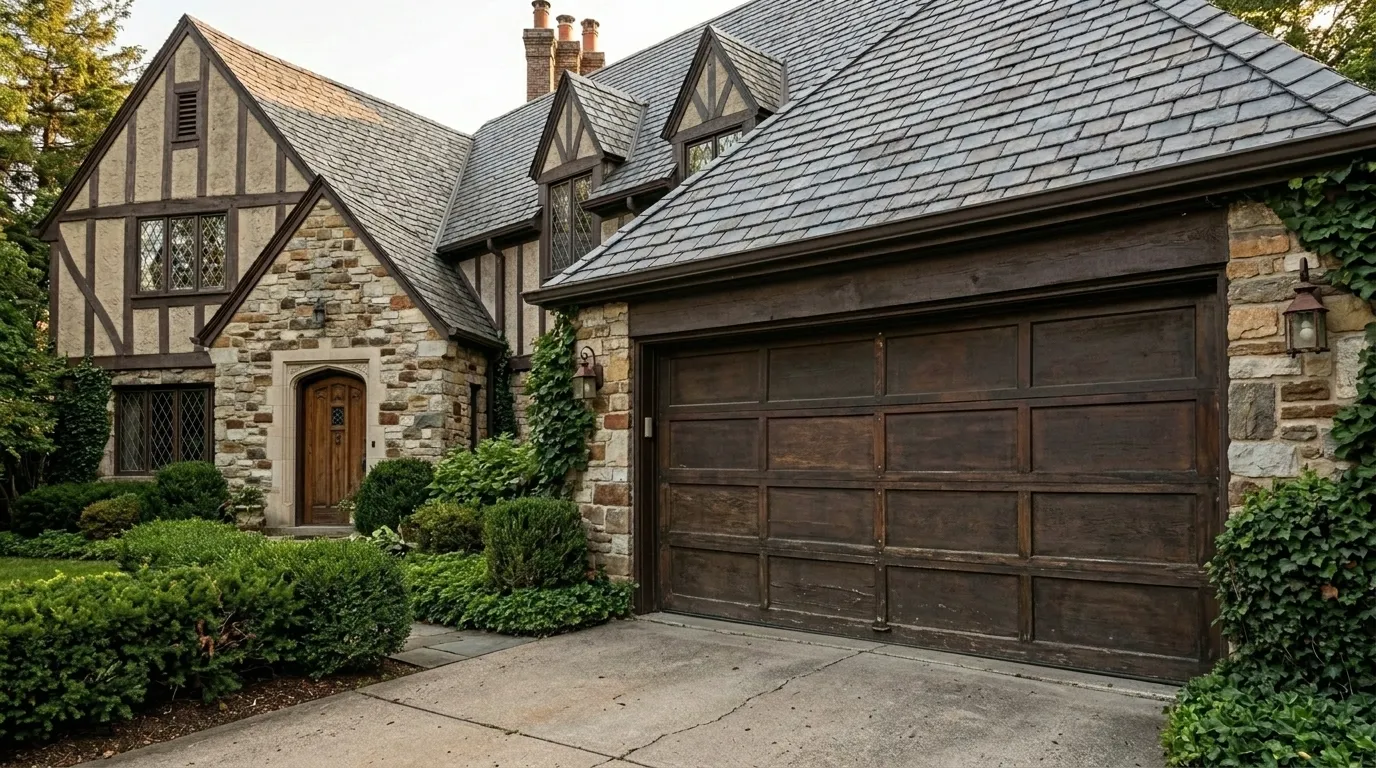
If the track brackets have loosened from decades of seasonal shift - which is common on houses from the 1962-2005 window that make up most of this area - the opener is doing exactly what it's told, pulling a door that's no longer running straight. Forcing it with a stronger opener or a new logic board just accelerates the wear on a track that was already out of line. The other common mistake is bending the track back into place and calling it fixed.
That buys a few weeks. It doesn't address why the bracket loosened in the first place, and on an older house with original hardware, the honest answer is sometimes that the track and rollers need replacing outright rather than another adjustment - a repair isn't always the cheaper long-term move once hardware is that old.
How we work
What Local Conditions Do
Put the two things together - a mild-with-freeze climate that never breaks anything outright but never stops moving things either, and a housing stock concentrated in the 1962-2005 range with a median around 1984 - and you get a specific, boring, very common failure: brackets loosen a little at a time, the track drifts out of parallel with the door panel, and one day a roller pops the lip of the rail instead of following it. It's rarely one event. It's forty winters of a quarter-turn here, a swollen jamb there.
That's also why a quick tightening job sometimes holds for years on a newer door in this area and barely holds a season on an original-hardware door from the older end of that build range. We don't guess at which one a house has until we're standing at the track with a level.
Questions
Common questions
My garage door jumped the track overnight - did something break?
Usually not overnight. What you're seeing is the end point of gradual bracket loosening, common on houses in this area built between 1962 and 2005. The mild climate here doesn't crack hardware suddenly; it works it loose slowly through seasonal shifts, and the door finally slips when misalignment crosses a threshold.
Can I just push the door back onto the track myself?
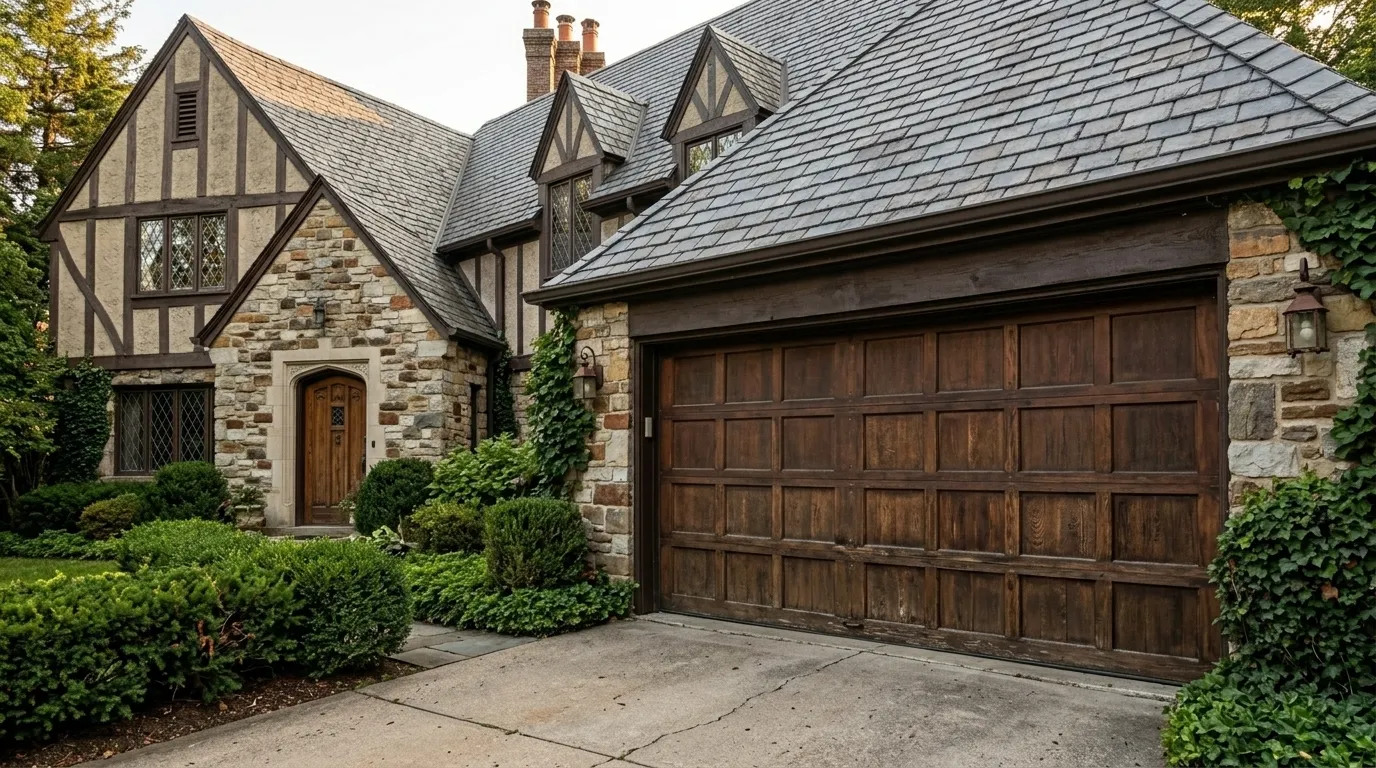
You can, and it may run again for a while, but if the bracket that let it slip is still loose, it'll happen again - often within weeks. On older hardware from this area's typical 1980s-era stock, we'd rather check bracket torque and roller wear than just reseat the door and leave the cause untouched.
Is this an opener problem or a track problem?
Almost always track, not opener, especially on a house from the common 1962-2005 build range here. The opener just follows the track. If the track has drifted from decades of seasonal wood and metal movement, the opener will strain, stutter, or trip its sensors - but replacing it won't fix the alignment.
Ready when you are
Need a garage door sorted in Renton?
Renton Garage Door Pros repairs and installs garage doors, springs and openers in Renton, WA and the surrounding area.